
Utah’s VPN Law and Broader Threats to Digital Privacy and Anonymity
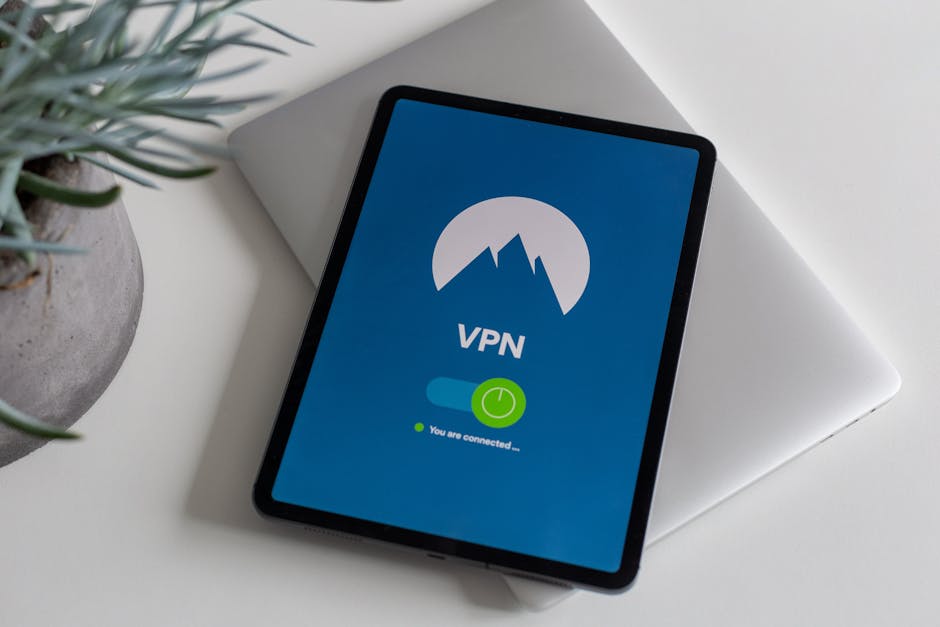
Featured image: Photo by Stefan Coders on Pexels.
In a significant move that has drawn concern from digital privacy advocates, Utah is set to implement a new law targeting Virtual Private Networks (VPNs). This legislation, formally known as the “Online Age Verification Amendments” (Senate Bill 73), represents a novel approach by a U.S. state to regulate a technology widely used for enhancing online privacy and security. While the bill contains provisions related to a tax on online adult content, a more immediate and pressing concern for digital rights organizations is the section that directly addresses VPN usage, which came into effect on May 6, 2026 [1]. This development places Utah in uncharted territory, potentially setting a dangerous precedent for the future of digital anonymity and privacy, not just within the state but potentially across the nation and even globally.
Utah’s Uncharted Territory for VPNs
Utah’s SB 73 aims to regulate VPN use primarily in two ways. Firstly, it stipulates that an individual is considered to be accessing a website from Utah if they are physically present in the state, regardless of any attempts to mask their geographic location using a VPN, proxy server, or other means. This provision creates a significant “liability trap” for commercial entities, particularly those hosting “a substantial portion of material harmful to minors.” These entities are now prohibited from facilitating or encouraging the use of a VPN to bypass age checks, including providing instructions or means to circumvent geofencing [1].
The implications of this “liability trap” are far-reaching. If a website cannot reliably detect a VPN user’s true location and the law requires it to do so for all users in Utah, the legal risk could compel the site to either block all known VPN IP addresses or mandate age verification for every visitor globally. Such an outcome would subject millions of users to invasive identity checks or outright blocks to their VPN use, irrespective of their actual residence. While SB 73 does not explicitly ban VPNs, it operates under a “don’t ask, don’t tell” enforcement style, discouraging their use by imposing liability and muzzling websites from providing truthful information about a lawful privacy tool [1]. This raises serious First Amendment concerns regarding platforms’ ability to inform their users about privacy-enhancing technologies.
Technical Hurdles and Unintended Consequences
Beyond the legal and ethical concerns, the technical feasibility of enforcing Utah’s new VPN provisions is highly questionable. Blocking all known VPN and proxy IP addresses is an ongoing and often futile endeavor, akin to a “whack-a-mole” game. VPN providers constantly add new IP addresses, and no comprehensive blocklist exists that can keep pace. Complying with Utah’s requirements would demand technical feats that are likely impossible for most companies. The internet, by its very design, is built to route around censorship [1].
If commercial VPN providers are successfully hampered in Utah, motivated users are likely to transition to alternative methods. These could include non-commercial proxies, private tunnels through cloud services like AWS, or residential proxies that are virtually indistinguishable from standard home internet traffic. Such workarounds are expected to emerge rapidly once the law takes effect. The collateral damage from these provisions will disproportionately fall on legitimate users, including businesses, journalists, and survivors of abuse, who rely on commercial VPNs for essential data security and privacy. Ultimately, these measures are unlikely to deter tech-savvy individuals but will significantly impact the privacy of ordinary Utah residents seeking to protect their data from brokers or malicious actors [1].
A Precedent for Digital Control
Utah’s decision to target VPNs is a stark example of lawmakers doubling down on policies that infringe upon digital privacy, even when previous attempts at age-verification mandates have proven ineffective. As the Cato Institute noted, if an internet policy can be easily circumvented by a common technology offering significant privacy and security benefits, perhaps the policy itself is the problem [1]. Attacks on VPNs are, fundamentally, attacks on the very tools that enable digital privacy and anonymity online.
By taking this step, Utah is establishing a precedent that appears to prioritize government control over the fundamental architecture of a private and secure internet. This trend is not isolated to the U.S.; regulators in other countries are also considering VPN restrictions. For instance, the UK Children’s Commissioner has labeled VPNs a “loophole that needs closing,” and the French Minister Delegate for Artificial Intelligence and Digital Affairs has indicated that VPNs are “the next topic on my list” after enacting a ban on social media for children under 15 [1]. This global convergence of interest in restricting VPNs underscores the growing threat to digital privacy and the increasing pressure on tools designed to protect online freedom.
Broader Assaults on Transparency and Privacy
The battle over VPNs in Utah is part of a broader pattern of governmental efforts to diminish digital privacy and public oversight. Across the country, states are enacting or proposing laws that restrict public access to data collected by surveillance technologies like Automated License Plate Readers (ALPRs). ALPRs continuously scan and record license plates, capturing deeply revealing information about individuals’ movements, habits, and associations. Public records laws have historically allowed reporters, community advocates, and organizations like EFF to scrutinize the use, misuse, and sharing of ALPR data by law enforcement agencies [2].
However, recent legislative efforts in states such as Arizona, Connecticut, Washington, Illinois, Georgia, Maryland, and Oklahoma aim to exempt broad categories of ALPR information from public disclosure. This includes data on the extent of law enforcement use, sharing across agencies, the number of scans, hit rates, error rates, and even images of individuals’ own vehicles [2]. While legitimate concerns exist about the wholesale public disclosure of raw ALPR data due to privacy implications, many of these proposals do not offer a balanced approach. Instead, they risk completely cutting off access to crucial information that documents potential abuses perpetuated by ALPR systems, thereby stymying public accountability and informed discussion about these powerful and controversial surveillance technologies [2].
The Evolving Landscape of Digital Rights
The challenges posed by Utah’s VPN law and the efforts to restrict ALPR data transparency reflect a larger, evolving struggle for digital rights globally. The optimism surrounding the internet’s potential for connection and collective action, particularly during events like the 2011 Arab uprisings, has matured into a more nuanced understanding of the constant effort required to defend online freedoms [3].
In the early 2000s, the concept of “digital rights” began to solidify as an extension of fundamental human rights, driven by open-source communities, hackers, and pioneering organizations. The years following the Arab Spring saw a significant growth in digital rights organizations, particularly in regions like the Middle East and North Africa. Groups like Nawaat, the Arab Digital Expression Foundation, and SMEX emerged, initially focusing on promoting creative technology use and democratic information sharing. Over time, their focus expanded to include the internet’s infrastructure and how freedom of expression and privacy are affected by it [3]. This evolution highlights a crucial shift: digital rights are no longer seen as a separate, niche field but as deeply intertwined with economic, political, and social rights, and indeed, with geopolitics itself.
From Niche to Necessity: Digital Rights in the Modern Era
Today, the digital rights movement has decentralized and broadened its appeal, attracting individuals from diverse fields who recognize how digital rights intersect with their work. Artists, archivists, and journalists now engage in conversations previously dominated by tech specialists and activists. This expansion reflects the internet’s transformation into a fundamental infrastructure for nearly all sensitive operations and daily life [3]. Consequently, all types of organizations, companies, and initiatives are increasingly concerned with digital security, the impact of internet laws, and how surveillance technologies affect their operations.
The collaborative work that has emerged within the digital rights community, including conferences like Bread and Net and the Palestine Digital Activism Forum, and alliances such as the Middle East Alliance for Digital Rights (MADR), has strengthened the movement. These forums facilitate networking, knowledge sharing, and coordinated advocacy efforts, creating pressure points on Big Tech regarding content moderation policies and influencing discussions at international levels like the UN [3]. This collaborative ecosystem is vital for sustaining the fight for digital freedoms against growing challenges.
The Fight for Digital Sovereignty
Looking ahead, a key challenge for the digital rights movement is the concept of “digital sovereignty” – the ability of people and communities to choose, control, and use technology that aligns with their needs and values. Debates over who owns and hosts our data have intensified, especially amid revelations about the role of U.S.-based companies in regional conflicts. There’s a growing awareness of the risks associated with dependence on specific providers for cloud storage and hosting infrastructure, particularly when these services can be weaponized or used to deplatform content that doesn’t align with certain foreign policies [3].
This focus on digital sovereignty pushes the movement to examine the political economy of surveillance technologies, their supply chains, and the geopolitical networks that empower their proliferation. It moves beyond isolated technological concerns to understand the broader ecosystem, including the intersection of AI, the military, and global capitalism. The core questions for the digital rights community are increasingly about power: who holds it, how it is exercised, and who is left unprotected [3]. As the internet becomes more regulated and surveilled, the ongoing effort is not just to keep it open, but to reimagine its infrastructure, ownership, and address the global inequalities embedded within it.
The legislative actions in Utah regarding VPNs, alongside broader state-level efforts to restrict transparency around surveillance technologies like ALPRs, underscore a critical moment for digital privacy and anonymity. These developments illustrate a growing trend where governments seek greater control over online activities, often at the expense of individual freedoms. The global digital rights movement, forged through years of collaboration and advocacy, remains essential in navigating these complex challenges, pushing for a more private, secure, and equitable digital future. The struggle is no longer just about access or expression, but about the fundamental right to control one’s digital existence in an increasingly interconnected and monitored world.
Key Takeaways
- Utah’s SB 73 is the first U.S. state law to explicitly target VPN use to circumvent age verification, creating a “liability trap” for commercial entities.
- The law raises significant First Amendment concerns by muzzling platforms from providing information about privacy tools.
- Technical enforcement of VPN blocks is largely infeasible, likely leading to workarounds and disproportionately affecting legitimate VPN users.
- Utah’s law sets a dangerous precedent, aligning with global trends of governments seeking to restrict VPNs and prioritize control over digital privacy.
- Broader threats to digital privacy include state efforts to block public access to data from surveillance technologies like ALPRs, undermining transparency and oversight.
- The global digital rights movement has evolved to recognize digital rights as fundamental human rights, integrating them with economic, political, and social issues.
- The concept of “digital sovereignty” is emerging as a critical focus, addressing who controls data, infrastructure, and the risks of dependence on specific tech providers.
Sources
- [1] Utah’s New Law Targeting VPNs Goes Into Effect Next Week (www.eff.org)
- [2] Open Records Laws Reveal ALPRs’ Sprawling Surveillance. Now States Want to Block What the Public Sees. (www.eff.org)
- [3] Digital Hopes, Real Power: From Connection to Collective Action (www.eff.org)
StealthAnon is a news and analysis site covering cybersecurity, privacy, web analytics, anonymity, and tech tools.