
Digital Privacy Under Siege: Examining Flawed Encryption, Hidden Police Surveillance, and Policy Missteps
Featured image: Photo by Thomas Windisch on Pexels.
In an increasingly digitized world, the promise of personal privacy often clashes with the realities of technological implementation and governmental oversight. From the nuanced complexities of encryption methods designed to protect our data to the covert strategies employed by law enforcement, and the legislative attempts to regulate online behavior, the landscape of digital privacy is under constant siege. Understanding these multifaceted challenges is crucial for anyone navigating the modern internet, as the choices made by tech companies and policymakers directly impact our fundamental rights and freedoms online.
The Illusion of Encrypted Privacy
When technology companies introduce new security features, the public often assumes a robust enhancement of privacy. However, a closer look sometimes reveals a different picture. Amazon’s recent “Throw Away the Key Encryption” (TAKE) for its Ring cameras, for instance, aims to reduce the amount of video content available to the company and, consequently, to law enforcement. While presented as an improvement, TAKE falls short of delivering genuine privacy protections [2].
TAKE operates by having the user’s device hold an encryption key, with Ring’s cloud infrastructure temporarily holding copies of these keys for up to 24 hours. This allows Ring to offer features like video descriptions, smart alerts, and video search, which require cloud processing. After 24 hours, Ring claims these keys are deleted. This differs from the current default, where Ring always has access to footage for processing. While this offers some restriction on historical footage, it introduces significant vulnerabilities [2].
The core issue is that Ring still gains access to unencrypted video for a short period. To provide its “smart” features, footage must be decrypted on Ring’s cloud servers. User actions, such as wanting to watch an old video or use a smart feature, cause the keys to be sent back to the server for decryption. This makes the system functionally similar to encryption at rest where the server holds the keys, rather than true end-to-end encryption where the company never possesses the keys [2]. Moreover, account recovery keys are stored on the camera itself by default, and indices of video contents are available to Ring. This means that TAKE does not protect against mass surveillance; law enforcement could request broad searches and then seize cameras to decrypt specific videos [2].
Furthermore, the design makes it technically possible for Ring to alter its practices if compelled by law enforcement, for example, by saving content encryption keys or unencrypted videos from memory to disk. While Ring states it will only provide encrypted video files in response to legal processes and objects to overbroad requests, the fundamental access mechanism remains a concern. True end-to-end encryption, which Ring already offers as an option, ensures the company never has access to the keys, making it impossible to comply with demands to retain or turn over unencrypted content [2]. The lack of independent third-party audits for the entire infrastructure further necessitates a “trust us” approach, which is insufficient for real privacy assurance [2].
Covert Surveillance: Law Enforcement’s Hidden Tactics
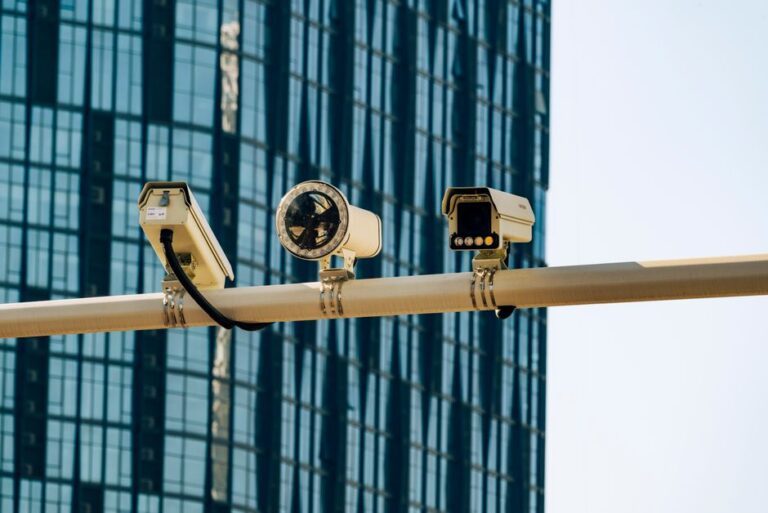
Beyond the complexities of corporate encryption, citizens face a growing threat from law enforcement agencies increasingly deploying sophisticated surveillance technologies, often with deliberate efforts to avoid public scrutiny and legal challenges. Tools like automated license plate readers (ALPRs), cell-site simulators (often called “stingrays”), and facial recognition systems are becoming commonplace, raising significant civil liberties concerns [4].
One alarming trend is the explicit instruction given to police officers to conceal the use of these technologies. For instance, a county in Iowa explicitly tells police in its ALPR usage policy: “DO NOT MENTION ALPR USAGE TO THE OCCUPANTS OF THE VEHICLE” and “DO NOT MENTION ALPR USAGE IN YOUR REPORT OR COMPLAINT UNLESS ABSOL
Sources
- [1] Governor Newsom Signs Student-Backed Digital Literacy Bills Alongside Misguided Bans (www.eff.org)
- [2] Cold TAKE: Amazon's New Encryption Method Still Doesn't Deliver Real Privacy (www.eff.org)
- [3] We All Deserve a Better Internet, Not A Smaller One (www.eff.org)
- [4] Cops Play Hide and Seek About Using Spy Tech to Avoid Scrutiny and Bad PR (www.eff.org)
StealthAnon is a news and analysis site covering cybersecurity, privacy, web analytics, anonymity, and tech tools.