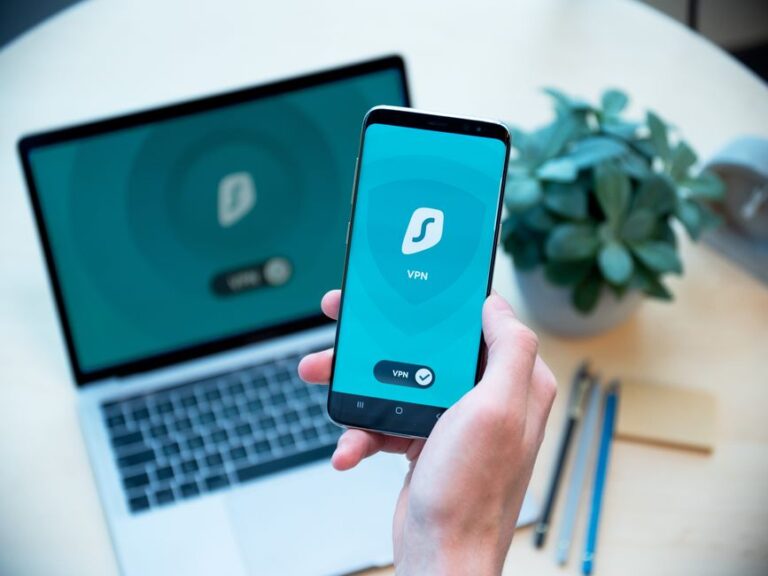

US Congress Debates New Site-Blocking Bills Threatening VPNs and Internet Freedom
Featured image: Photo by hitesh choudhary on Pexels.
The United States Congress is once again embroiled in debates over proposed legislation that could fundamentally reshape the architecture of the internet, with significant implications for user privacy and freedom. At the heart of this discussion are new site-blocking bills, such as the American Copyright Protection Act (ACPA) and the DEFEND IP Act, which aim to combat online copyright infringement. While presented as measures to protect intellectual property, critics argue these proposals pose a severe threat to the open internet, encouraging censorship, overblocking, and, for the first time explicitly, targeting virtual private network (VPN) providers.
A Renewed Push for Site-Blocking
The concept of site-blocking legislation is not new to the halls of Congress. Over a decade ago, widespread public opposition led to the defeat of the Stop Online Piracy Act (SOPA) and the PROTECT IP Act (PIPA), which sought to create mechanisms for blocking access to websites accused of infringement. Despite that historical rejection, a new wave of similar bills has emerged, reflecting a persistent effort to implement a system for making entire websites inaccessible. The latest iteration, the “Deterring Extraterritorial Foreign Exploitation of Networks Damaging Intellectual Property” (DEFEND IP Act), epitomizes this approach. Its proponents argue it will defend intellectual property, but its structure suggests it will instead incentivize censorship, lead to overblocking, and facilitate bad faith attempts to silence online content [1].
Unlike existing copyright enforcement mechanisms like the Digital Millennium Copyright Act (DMCA), which allow for the removal of specific infringing content, site-blocking bills aim much further. They are designed to make an entire website inaccessible to users, regardless of whether the site hosts a vast amount of legitimate content alongside alleged infringing material. This distinction is crucial: it shifts the focus from targeting individual instances of infringement to disappearing entire platforms from the internet. The DEFEND IP Act, for example, would allow a rightsholder to obtain a court order requiring service providers to block access to an entire website simply by alleging copyright infringement, without sufficient deterrents for bad faith blocking or meaningful remedies for those whose legitimate speech is impacted [1].
The American Copyright Protection Act (ACPA) and Its Reach
Among the recent proposals, the American Copyright Protection Act (ACPA), H.R. 10364, introduced by Rep. Darrell Issa (R-CA), stands out for its particularly broad scope and explicit targeting of tools vital for internet privacy. ACPA proposes a new legal framework allowing copyright owners to seek court orders labeling foreign websites as “foreign piracy sites.” Once designated, these orders could compel internet service providers (ISPs), DNS providers, and, critically, VPN providers to take “commercially reasonable steps” to prevent their U.S. users from accessing these sites [2].
This explicit inclusion of VPN providers marks a significant and alarming departure from previous site-blocking proposals. For instance, an earlier bill, the Foreign Anti-Digital Piracy Act (FADPA), at least excluded companies that provided only VPN services or those offering DNS resolution exclusively through encrypted protocols. ACPA drops these protections entirely, directly bringing VPNs into the crosshairs of potential blocking orders [2]. This development is particularly concerning for internet freedom advocates, as VPNs are essential tools for online privacy, security, and accessing an uncensored internet, especially in regions with restrictive regimes or for individuals seeking to bypass geographical content restrictions.
Furthermore, ACPA broadens the definition of what constitutes a “piracy site.” While previous proposals might have focused on sites with “no commercially significant purpose or use” other than infringement, ACPA expands this to include sites with “only limited commercially significant purpose or use” beyond infringement [2]. This broader definition means that even websites hosting substantial legitimate commerce or content could be labeled a ”
Sources
- [1] Site-Blocking Will Not Defend IP, No Matter the Bill’s Name (www.eff.org)
- [2] Congress Has Another Site-Blocking Bill, And This One Targets VPNs (www.eff.org)
StealthAnon is a news and analysis site covering cybersecurity, privacy, web analytics, anonymity, and tech tools.