
California Under Siege: Proposed Social Media Ban and AI Surveillance Threaten Citizen Privacy
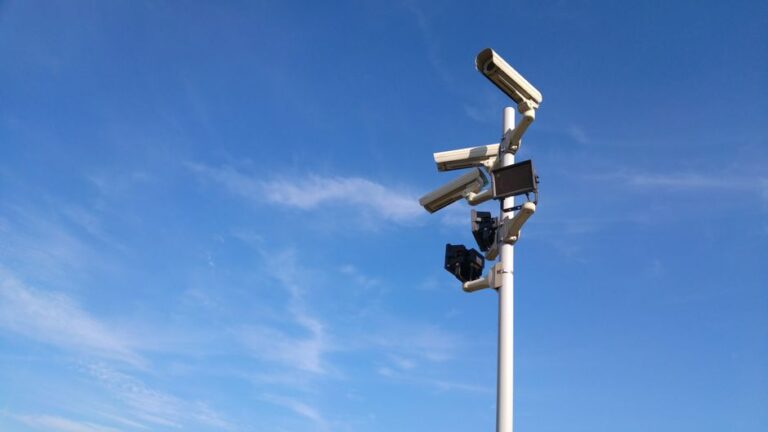
Featured image: Photo by Dan Nelson on Pexels.
California, often seen as a bellwether for technological and social trends, is currently grappling with two significant legislative and operational proposals that threaten to redefine the landscape of citizen privacy and digital freedom. On one hand, a sweeping social media bill, A.B. 1709, seeks to impose age bans and mandatory identity verification for online platforms, potentially dismantling online anonymity for all users. Simultaneously, federal agencies are pushing to install advanced surveillance towers equipped with sophisticated monitoring capabilities in coastal communities, raising alarms about constant, pervasive tracking of residents. Both initiatives, though distinct in their origin and immediate targets, converge on a worrying trend: the erosion of fundamental digital rights in the name of safety or security.
The Proposed Social Media Ban: A.B. 1709
California Assembly Bill 1709 is a legislative proposal that, if passed, would fundamentally alter how Californians interact with social media. The bill aims to ban anyone under the age of 16 from using social media platforms. More critically, it would mandate that every user, regardless of age, verify their identity before being granted access to these platforms [1]. This means that to participate in what has become a modern public square, Californians would be compelled to submit highly sensitive government-issued identification or even biometric information to private companies.
The implications for privacy are profound. A.B. 1709, despite its stated goal of “safety,” would effectively destroy online anonymity, a cornerstone of free expression since the nation’s founding and a pillar of online safety in the digital age. Anonymity allows for creativity, innovation, and political thought to flourish, and it is essential for individuals who risk retaliation for their speech or associations. Forcing identity verification would strip away this protection, exposing sensitive personal data to potential breaches and misuse [1]. The bill would create centralized “honeypots” of immutable biometric data and government IDs, making users prime targets for identity theft and establishing a permanent surveillance infrastructure by third-party vendors. We have already witnessed numerous data breaches involving age and identity verification services, yet A.B. 1709 would compel millions more Californians, including the youth it purports to protect, to feed their most sensitive information into this expanding surveillance ecosystem [1].
Beyond privacy, the bill poses a significant threat to free speech rights. The First Amendment protects the right to speak and access information for all individuals, irrespective of age. A blanket ban on social media for those under 16 would cut off lawful speech for millions of teenagers, while the age verification mandate would unconstitutionally chill the exercise of First Amendment rights for all users. Critics argue that these mandates disregard long-standing Supreme Court precedent that protects young people’s speech and has consistently found such bans unconstitutional. Banning young people entirely from social media is an extreme measure that fails to address the actual risks of online engagement, and California has no valid interest in overriding parents’ and young people’s rights to make their own decisions about social media use [1].
The reliance on imperfect age-verification technology is also a concern. Such systems are known to disproportionately silence marginalized communities, including those whose IDs do not match their presentation, individuals with disabilities, trans and gender non-conforming people, and people of color. These groups are more likely to be wrongfully denied access by discriminatory systems [1]. Furthermore, the bill’s paternalistic approach replaces parental decision-making with government control, imposing a one-size-fits-all solution instead of empowering families to guide their children’s online experiences. While framed as a safety measure, A.B. 1709 acts as a blunt instrument of censorship, potentially severing vital lifelines for young people who use social media for identity exploration, community building, civic engagement, and accessing support—especially for LGBTQ+ and marginalized youth who may lack support in their physical environments [1].
Finally, the bill’s effectiveness is highly questionable. It draws parallels to similar legislation in Australia, where early results indicate overblocking by platforms, increased VPN use, and smaller platforms shutting down due to costly compliance. Such outcomes would not only fail to protect youth but also inadvertently strengthen major tech companies, as smaller platforms struggle to meet stringent requirements, driving users and their data back to the largest corporations. Moreover, California, facing a significant budget deficit, would be wasting taxpayer dollars on an “e-Safety Advisory Commission” and millions in legal fees to defend a law widely considered unconstitutional [1].
Surveillance Creep: The San Clemente Tower
While A.B. 1709 targets digital interactions, another battle for privacy is unfolding in California’s physical spaces. Customs and Border Protection (CBP) is seeking permission from the city of San Clemente to install an advanced surveillance tower, developed by Anduril Industries, on a cliff overlooking the city. This particular model, the Sentry, is part of the Autonomous Surveillance Tower (AST) program and represents a significant expansion of government monitoring capabilities into civilian areas [2].
Despite CBP’s claim that the tower will primarily monitor the coastline for boats carrying migrants, its proposed location 1.5 miles inland means it would overlook the majority of San Clemente, a city with 62,000 residents. The system combines video, radar, and computer vision to “constantly scan” for movement, identifying and tracking objects of interest. Depending on the model, its camera could see as far as nine miles, effectively covering the entire city and potentially reaching neighboring Dana Point [2].
The Sentry system is described by CBP as utilizing “advanced computer vision algorithms to autonomously detect, identify, and track items of interest (IoI) as they transit through the towers field of view.” It can determine if an IoI is a human, animal, or vehicle without operator intervention, generating alerts with location and images for operators [2]. This capability raises serious privacy concerns for San Clemente residents. City officials proposed a prohibition on surveilling neighborhoods in a lease agreement, but CBP rejected this, stating that while the system would be configured to “avoid” scanning residential areas, it would remain capable of tracking human beings through neighborhoods during an “active smuggling event.” To restrict this functionality, CBP argued, would be contrary to the system’s intent [2]. This effectively means residents could be subject to tracking by a federal agency within their own homes and communities, regardless of their involvement in any alleged activity.
The data retention policies for these towers are equally troubling. Anduril towers retain a variety of data, including images. While one document indicates a potential 30-day retention period, it then contradicts itself, stating that data will be held indefinitely to “train algorithms” [2]. This means that imagery of residents and their activities could be stored permanently, fueling a surveillance product at taxpayer expense. Efforts by privacy advocates, such as the EFF, to obtain records on data retention schedules from CBP and the National Archives and Records Administration have been unsuccessful, highlighting a lack of transparency around this pervasive surveillance technology [2].
The San Clemente tower is not an isolated incident. CBP is rapidly increasing the number of these towers along the border and beyond, with plans to install 1,500 more in the coming years. Previous deployments have seen Anduril towers placed in public parks and even outside RV parks, where they were unable to see the border without capturing data from nearby communities, including churches [2]. This expansion, despite government reports spanning over two decades documenting the ineffectiveness and wastefulness of tower-based surveillance systems, underscores a troubling commitment to widespread monitoring at significant public cost [2].
Erosion of Fundamental Rights
These two distinct but related threats—the proposed social media ban and the expanding surveillance infrastructure—represent a significant erosion of fundamental rights for Californians. Both initiatives, under the guise of safety or security, demand increased data collection, diminish online and physical anonymity, and expand government and corporate power over individual lives. The social media ban forces citizens to trade privacy for access to public discourse, while the surveillance towers introduce constant, automated monitoring into everyday life. California, a state that often champions progressive values, is at a critical juncture where the choices made today will determine the extent of its citizens’ digital and personal freedoms for years to come.
The Path Forward
Addressing these challenges requires active public engagement and a robust defense of civil liberties. Californians must be aware of these proposals and understand their far-reaching implications. Protecting privacy and free expression in both online and physical spaces is paramount to maintaining a free and open society. The decisions regarding A.B. 1709 and the San Clemente surveillance tower will set precedents, not just for California, but potentially for the entire nation, highlighting the urgent need for thoughtful deliberation and a strong stance against policies that undermine fundamental rights.
Key Takeaways
- A.B. 1709 proposes banning social media for users under 16 and mandates identity verification for all, threatening online anonymity and free speech [1].
- The bill would force users to submit sensitive government IDs or biometric data to private companies, creating “honeypots” vulnerable to breaches and permanent surveillance [1].
- CBP seeks to install an advanced surveillance tower in San Clemente, capable of constantly monitoring entire neighborhoods with video, radar, and computer vision [2].
- The San Clemente tower, despite being 1.5 miles inland, could track individuals through residential areas, and its data may be retained indefinitely for “training algorithms” [2].
- Both initiatives represent a significant erosion of privacy, free expression, and individual autonomy, setting dangerous precedents for digital rights and government oversight.
Sources
- [1] Act Now to Stop California’s Paternalistic and Privacy-Destroying Social Media Ban (www.eff.org)
- [2] California Coastal Community Must Reject CBP's AI-Powered Surveillance Tower (www.eff.org)
StealthAnon is a news and analysis site covering cybersecurity, privacy, web analytics, anonymity, and tech tools.