ALPR Systems’ Mission Creep: How License Plate Readers Track Citizens for Minor Issues
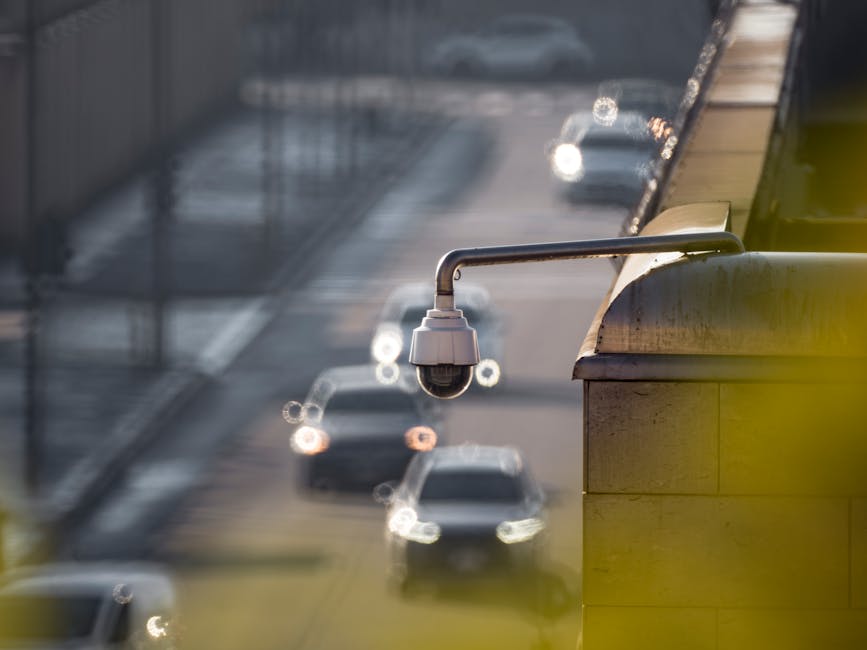
Featured image: Photo by tommy picone on Pexels.
Automated License Plate Reader (ALPR) systems, initially marketed as powerful tools for solving serious crimes, are increasingly being deployed for a far broader and more intrusive range of purposes. An analysis of millions of searches of Flock Safety ALPR data by law enforcement agencies has unveiled a concerning pattern: in the absence of a warrant requirement, police are leveraging these extensive surveillance networks for virtually any inquiry, often for minor issues that bear little resemblance to high-stakes criminal investigations [1]. This unrestricted access to sensitive location data is fostering a culture where ALPRs become a universal tracker of citizens’ movements, extending far beyond their advertised utility.
ALPR systems operate by deploying camera units at roadsides and intersections. These cameras meticulously document every passing vehicle, capturing its license plate, make, model, color, and other distinguishing characteristics, along with the precise date, time, and location of the sighting. This data is then aggregated into vast databases, often shared across numerous agencies in nationwide pools. While law enforcement agencies and ALPR companies like Flock Safety frequently emphasize the technology’s role in solving major crimes, the actual usage data tells a different story, revealing a significant mission creep into low-level and even mundane investigations [1].
Tracking for School Residency Verification
One of the most striking examples of ALPR mission creep is their use in school residency verification. School districts across the U.S. conduct investigations to ensure that enrolled children genuinely live within their designated zones. To facilitate these checks, some districts have enlisted law enforcement, who then tap into ALPR databases to monitor the daily movements of families [1].
Consider the case of Buford City Schools in Georgia, a district serving approximately 6,000 students. Between January 2025 and March 2026, school police conducted over 375 ALPR searches specifically for “school residency verification” or “RV.” In some months of 2026, these searches constituted three-quarters of all ALPR queries in the district. A spokesperson for Buford City Schools defended the practice, stating that “Flock Safety is one of the tools we use to verify residency and protect the integrity of the Buford City School System for families who live within the district” [1].
However, the implications of such searches extend far beyond simply confirming an address. Each time a license plate is queried, it can expose highly personal information about a family’s life: their visits to doctors, their places of worship, their evening outings, and their travel patterns. This deeply personal data, which is entirely unrelated to school residency, becomes accessible, representing a significant invasion of privacy [1].
Buford is not an isolated incident. The Delhi Township Police Department (DTPD) in Ohio, for instance, ran 35 searches related to students in five schools over a three-month period in spring 2025. DTPD also defended the practice, citing warnings to parents about false residency statements. Following an inquiry, DTPD indicated they would implement changes to how these queries are documented to enhance accountability. Other agencies, including Cortland Police Department in Ohio and Lincoln Police Department in Alabama, have also conducted school residency searches, highlighting a widespread, if previously obscured, application of ALPR technology [1].
ALPRs in Employment Background Checks
Another unexpected and concerning application of ALPR systems is their use in employment background checks, particularly for government positions. Few individuals would anticipate that applying for a job could lead to their vehicle’s movements being scrutinized through a nationwide surveillance network. Yet, several law enforcement agencies have conducted ALPR searches specifically related to employment [1].
Examples abound: The Jefferson County Sheriff’s Office in Missouri executed six searches across 2,853 networks, explicitly noting “employment” as the reason. The Little Elm Police Department in Texas ran ten searches across 6,306 networks, also citing “EMPLOYMENT.” The Ridgeland Police Department in Mississippi conducted two searches across over 6,000 networks for an “employment background inv,” and the Texas City Police Department in Texas performed three searches for “pre employment background.” Even the Zion Police Department in Illinois ran a search for “Employee Background” across 585 networks [1].
While some agencies, like the Davidson Police Department in North Carolina, attributed such logs to a “poor choice of words” by an investigator, clarifying that the search was related to a protective order violation discovered during a background check, the prevalence of these logged reasons indicates a broader trend. Additionally, several agencies, including Avon Police Department in Indiana and Rockford Police Department in Illinois, have run searches simply described as “background check” or “background checks,” which could encompass employment or other sensitive inquiries like concealed weapons permits [1].
Investigating Noise Complaints with Surveillance Tech
Perhaps one of the most trivial, yet equally alarming, applications of ALPR technology is its use in investigating noise complaints. While loud music or disruptive exhausts can certainly be irritating, they are a far cry from the serious crimes that ALPR systems are ostensibly designed to combat. Despite this, an analysis revealed 26 agencies where officers utilized ALPRs to investigate drivers over issues ranging from house parties to loud exhausts and simply “music” [1].
The scale of these investigations is disproportionate to the offense. Some of these agencies launched searches across more than 6,500 networks of cameras, effectively initiating a nationwide hunt for a booming subwoofer or a faulty muffler. This level of surveillance for such minor infractions underscores the profound mission creep at play, transforming a tool meant for serious crime into a mechanism for pervasive
Sources
- [1] More License Plate Reader Mission Creep: School Residency Verification, Background Checks, and Noise Complaints (www.eff.org)
- [2] Your Privacy Shouldn't Be A Corporate Decision (www.eff.org)
StealthAnon is a news and analysis site covering cybersecurity, privacy, web analytics, anonymity, and tech tools.