Unmasking the Privacy Threat: How Mobile App SDKs and Smart Devices Leak Your Location and Network
Featured image: Photo by Ann H on Pexels.
In an increasingly connected world, the convenience offered by mobile applications and smart devices often comes at a hidden cost: the erosion of personal privacy. While users grant permissions to apps and connect smart gadgets to their home networks, the intricate web of third-party software development kits (SDKs) and device functionalities can silently siphon off sensitive information, particularly location data and network access. This pervasive data collection, often occurring without explicit knowledge or meaningful consent, fuels a lucrative industry of data brokers and opens doors to various privacy and security risks. Understanding these mechanisms is the first step toward safeguarding your digital footprint.
The Ubiquitous Role of Mobile App SDKs
Mobile applications are rarely built from scratch. Developers frequently integrate third-party SDKs to add functionalities such as analytics, crash reporting, social media integration, and, most commonly, advertising. These SDKs are essentially bundles of code that streamline development, but they also act as conduits for data collection. For advertising SDKs, the primary goal is to help developers monetize their apps by displaying targeted ads. However, this targeting often relies heavily on user data, including precise location information.
An investigation by the Electronic Frontier Foundation (EFF) highlighted how certain advertising SDKs actively encourage and facilitate the sharing of users’ location data. This occurs through privacy-invasive default settings, financial incentives for developers, and sometimes unclear documentation [3, 4]. Many developers, focused on app functionality, may not fully grasp the extent to which these integrated tools are collecting and transmitting sensitive user information. Once an app is granted location permissions by the user, any embedded SDKs gain the same access, allowing them to automatically collect and share this data [4].
Privacy-Invasive Defaults and Developer Incentives
The default settings of many advertising SDKs are a critical factor in widespread location data leakage. Instead of requiring developers to opt-in to location sharing, some SDKs are configured to collect and transmit location data by default whenever an app has been granted location permissions [4]. This means that unless a developer specifically changes the settings, user location data is automatically part of the ad bidding process. For example, InMobi, a widely used advertising SDK, explicitly states that its SDK “automatically forwards location signals when available” and recommends sharing location data, noting that “location-enriched impressions typically yield higher revenue” [4]. Such financial incentives can subtly pressure developers to enable or maintain these data-sharing practices, even if the app itself doesn’t require precise location for its core function.
Other SDKs, like BidMachine, have also been observed to collect location data by default. While they may update documentation after scrutiny, the underlying default behavior often persists, making it challenging for developers to prevent user data from being shared with advertisers without extensive configuration [4]. Verve’s HyBid SDK also makes it clear that location tracking is “enabled by default” if the user has given location permissions, emphasizing the benefit of “better targeted ads” [4]. These practices underscore a systemic issue where the path of least resistance for developers often leads to greater privacy risks for users.
The Pipeline to Data Brokers
The location data collected by these advertising SDKs doesn’t just stay within the advertising network; it often feeds into a larger ecosystem of data brokers. These brokers specialize in compiling, analyzing, and selling detailed profiles of individuals, often without their knowledge or meaningful consent. Location information sourced from the advertising industry has been used for a variety of purposes, including tracking individuals for investigations, surveillance tools, and even identifying specific individuals such as military personnel or union organizers [3, 4].
The mechanism often involves “real-time bidding” (RTB) auctions, where ad space is sold. In the process of these auctions, ad tech companies can broadcast user data, including location, to thousands of potential advertisers. Location data brokers have been known to participate in these auctions not necessarily to bid on ad space, but to collect the personal information contained in the bid requests [4]. This indiscriminate data sharing means that even if an app developer has no direct relationship with a data broker, their users’ location data can still end up in the hands of these entities through the advertising SDKs they employ [4]. This highlights a significant transparency gap, where users and even developers are often unaware of the ultimate destinations of their personal data.
Smart Devices: A New Frontier for Privacy Invasion
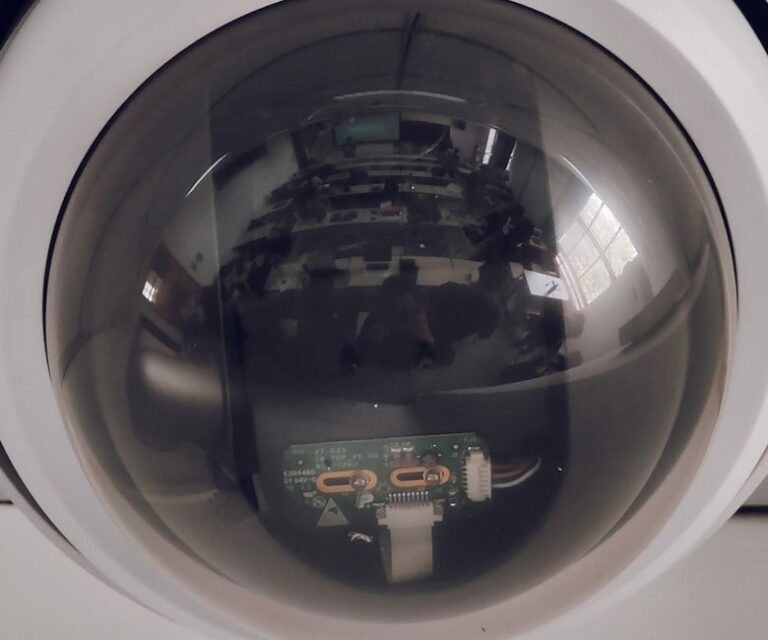
Beyond mobile apps, smart devices in our homes are emerging as significant vectors for privacy threats, particularly concerning location and network data. Devices ranging from smart TVs to streaming sticks, designed to enhance convenience and entertainment, can be repurposed or exploited in ways that compromise user privacy and security. These devices are often always-on and connected to the internet, making them attractive targets for those looking to leverage residential network access or collect ambient data.
A concerning trend involves smart TVs being used as “residential proxy nodes.” This means that unknown third parties can route their internet traffic through a user’s television, effectively turning the TV into an exit point for their online activities [2]. This practice not only consumes a user’s bandwidth but also implicates their home internet connection in potentially illicit or unwanted online behavior by strangers. LG Electronics USA, for instance, has announced plans to suspend apps built for its smart TVs that engage in this practice, following findings that a significant percentage of apps on its webOS store allow such routing [2]. The implications are profound, as users’ IP addresses could be associated with activities they had no part in, and their network performance could be degraded without their knowledge.
Streaming Sticks and Covert Operations
Generic TV streaming sticks, often marketed with promises of unlimited content for a one-time fee, present another layer of privacy and security risks. While warnings have long existed about these devices secretly renting out user internet connections to strangers, recent analyses reveal even more sophisticated, covert operations [1]. These devices can spoof themselves as mobile phones, clicking ads on websites as part of broader schemes to defraud online merchants and advertising networks [1]. This not only exploits the user’s internet connection for fraudulent purposes but also demonstrates a deep level of compromise and control over the device, potentially allowing for other data exfiltration or malicious activities.
The ease with which these devices can be compromised or pre-configured for nefarious purposes highlights the dangers of adopting inexpensive, generic smart hardware without understanding its underlying software and operational model. Users unknowingly become participants in large-scale fraud operations, and their network resources are covertly utilized, all while their privacy is fundamentally undermined.
The Need for Greater Transparency and Control
The issues surrounding mobile app SDKs and smart devices reveal a critical need for greater transparency, stronger regulations, and more robust privacy controls. Users often grant app-level permissions without understanding that these permissions extend to numerous third-party SDKs embedded within the app. Similarly, the “smart” features of home devices can mask functionalities that compromise network security and personal data. Meaningful consent cannot be assumed when the data collection and sharing practices are obscured by complex documentation, default settings, or hidden device operations. Developers have a responsibility to scrutinize the SDKs they integrate and to prioritize user privacy over potential revenue boosts from invasive data collection. Regulators and legislators also have a role to play in holding companies accountable for privacy-invasive designs and in establishing clear, enforceable protections for location and network data.
Key Takeaways
- Mobile app SDKs, especially advertising ones, frequently collect and share user location data by default.
- Financial incentives encourage developers to enable or maintain location data sharing for higher ad revenue.
- Location data collected by SDKs often feeds into a vast network of data brokers without user knowledge or consent.
- Smart devices, like TVs and streaming sticks, can be exploited to route third-party internet traffic through home networks.
- Generic streaming sticks may engage in hidden operations, such as spoofing mobile phones for ad fraud.
- App-level permissions do not guarantee informed consent for third-party SDK data collection.
- Greater transparency, stronger regulations, and developer accountability are crucial for protecting digital privacy.
Sources
- [1] Read This Before You Buy That TV Streaming Stick (krebsonsecurity.com)
- [2] LG to Ban Residential Proxies from Smart TV Apps (krebsonsecurity.com)
- [3] Mobile Ad Software Encourages Location Data Sharing, EFF Report Finds (www.eff.org)
- [4] Developers: Beware of Ad Libraries that Betray Your Users’ Location Privacy (www.eff.org)
StealthAnon is a news and analysis site covering cybersecurity, privacy, web analytics, anonymity, and tech tools.