Digital Privacy Under Scrutiny: Smart TVs, Border Searches, Drone Surveillance, and New Protection Tools
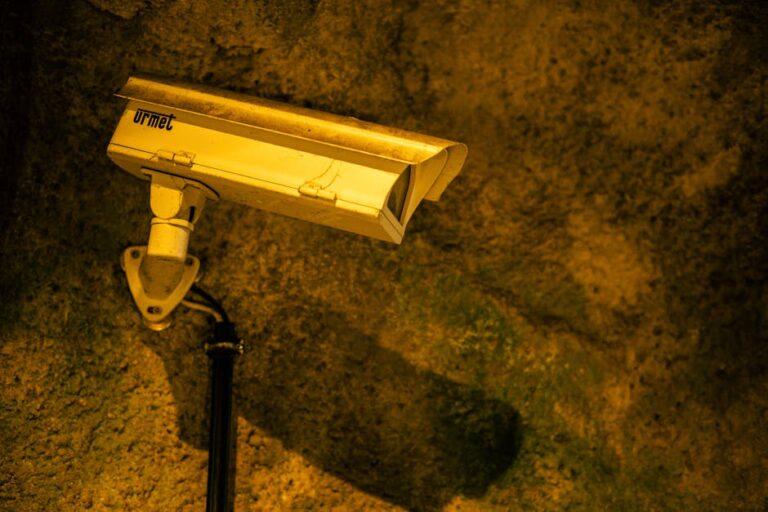
Featured image: Photo by Thomas Windisch on Pexels.
In an increasingly connected world, the boundaries of digital privacy are constantly being redefined. From the devices in our homes to the borders we cross and the skies above us, personal data is under unprecedented scrutiny. Understanding these evolving challenges is crucial for safeguarding our digital lives, as new technologies and legal interpretations reshape what it means to be private in the modern era. This article explores several key areas where privacy is being tested and highlights emerging tools designed to help individuals regain control over their personal information.
Smart TVs and Network Vulnerabilities
The convenience offered by smart televisions comes with a hidden cost: potential privacy risks. Many smart TV applications have been found to turn a user’s television into an always-on residential proxy node, effectively allowing unknown third parties to route their internet traffic through the user’s home network [1]. This practice raises significant concerns about network security and the potential for misuse of a user’s internet connection. For instance, researchers discovered that a substantial percentage of games and other apps available on LG’s webOS store permitted such activities [1].
In response to these findings, home appliance giants like LG Electronics USA have announced plans to suspend apps that facilitate this behavior [1]. While this move by manufacturers is a step towards mitigating the risk, it underscores the broader issue of connected devices in our homes becoming unwilling participants in data routing schemes. Users often remain unaware that their smart devices could be exploited in this manner, emphasizing the need for greater transparency and robust security measures in the smart home ecosystem.
Expanding Aerial Surveillance with Drones
The proliferation of drone-as-first-responder (DFR) programs is rapidly expanding aerial surveillance capabilities across the country. Police departments and other public safety agencies are increasingly adopting these programs, which rely on automated drone operations to respond to calls for service [2]. The Federal Aviation Administration (FAA) has streamlined the process for agencies to obtain waivers for Beyond Visual Line of Sight (BVLOS) flights, leading to a significant increase in the number of approved programs [2]. These waivers enable drones to fly beyond the operator’s visual range and above typical altitude limits, effectively expanding their reach into areas previously inaccessible to ground patrols.
While proponents argue that DFR programs enhance situational awareness for officers, the privacy implications are considerable. Drones, essentially flying cameras, can capture footage from private spaces such as backyards, roofs, and even through windows, often without the knowledge of the individuals being observed [2]. Footage collected from these drone flights can be streamed back to police offices, stored, shared, and analyzed, potentially integrating into other surveillance networks, such as automated license plate reader (ALPR) systems [2]. The normalization of DFR programs necessitates a strong emphasis on community involvement and transparency regarding their acquisition and deployment. Clear policies on appropriate use, public logs of flight paths, and regular re-evaluation are vital to protect privacy and security in communities considering or implementing drone surveillance [2].
Border Searches of Electronic Devices
Travelers crossing U.S. borders face a unique challenge to their digital privacy: the potential for warrantless, suspicionless searches of their electronic devices. A recent Fourth Circuit court decision, U.S. v. Belmonte Cardozo, determined that border agents can conduct manual searches of cell phones without any suspicion of wrongdoing [3]. This ruling differentiates manual searches from forensic searches—which involve external software to extract and analyze data—for which a higher standard of suspicion may apply [3].
The court’s decision relies on perceived differences between manual and forensic searches, such as the breadth of the search and the type of data revealed. However, privacy advocates argue that manual searches, even if brief, can reveal the “sum of an individual’s private life,” including highly personal details like political affiliations, religious beliefs, and medical inferences [3]. The Supreme Court, in *Riley v. California*, recognized the unprecedented privacy interests people have in their cell phones, stating that electronic device searches bear “little resemblance” to searches of physical containers and should be evaluated differently [3]. Despite this, the Fourth Circuit concluded that manual searches are “routine” under the border search exception, allowing them without a warrant or individualized suspicion [3]. This ruling is problematic because it fails to adequately protect the extensive personal data stored on modern devices, regardless of how an officer chooses to access it. While the court’s reliance on the brevity of the search in the *Belmonte Cardozo* case might leave a narrow opening for challenging lengthier manual searches, for now, border officers within the Fourth Circuit’s jurisdiction have broad authority to manually search electronic devices [3].
Empowering Individuals with New Protection Tools
Amidst these challenges, new tools are emerging to help individuals assert greater control over their digital privacy. California residents, for instance, now have access to the Delete Request and Opt-out Platform (DROP) [4]. This innovative tool allows a single request to be sent to all data brokers registered in California, asking them to delete personal information from their databases and to cease selling or sharing it [4]. Data brokers are companies that collect vast amounts of information about individuals, repackage it, and then sell it to various third parties, often without the individual’s direct consent.
The DROP tool significantly streamlines a process that was once incredibly time-consuming and tedious, cutting down the effort required to contact hundreds of individual brokers [4]. By utilizing DROP, California residents can reduce unsolicited communications, improve their personal cybersecurity by limiting the number of entities holding their data, and exert more control over their personal information [4]. The platform targets identifying information such as social security numbers, precise geolocation data, browsing history, email addresses, and phone numbers, as well as inferences made about individuals based on this data [4]. While the opt-out of sale request should be indefinite, individuals may need to periodically update their deletion requests as new data brokers register or new information is collected [4]. For those outside California, similar legislative efforts are underway in other states, and general guides exist to help all individuals manage their digital footprint and limit data broker access to their personal information [4].
Conclusion
The landscape of digital privacy is complex and constantly shifting, marked by both growing threats and emerging protections. From smart TVs acting as unwitting proxy servers to expanded drone surveillance and broad border search powers, our personal data faces numerous vulnerabilities. However, advancements like California’s DROP tool demonstrate a growing recognition of the need for individuals to have effective means to protect their privacy. Staying informed about these developments and actively utilizing available tools are essential steps in navigating the challenges of digital privacy in the modern age, empowering individuals to reclaim control over their personal information.
Key Takeaways
- Smart TVs can pose privacy risks by acting as residential proxy nodes for third-party internet traffic.
- Drone-as-first-responder (DFR) programs are expanding aerial surveillance into private spaces, raising significant privacy concerns.
- A Fourth Circuit ruling allows border agents to conduct manual phone searches without suspicion, impacting travelers’ digital privacy.
- California’s DROP tool enables residents to easily request data brokers to delete their personal information and stop selling it.
- Proactive steps, awareness, and utilizing available tools are crucial for safeguarding digital privacy in an evolving technological landscape.
Sources
- [1] LG to Ban Residential Proxies from Smart TV Apps (krebsonsecurity.com)
- [2] Hundreds of Drone-as-First-Responder Programs Could Soon Be Launched Across the Country (www.eff.org)
- [3] The Fourth Circuit Says Border Agents Can Search Your Phone By Hand, No Suspicion Required (www.eff.org)
- [4] Protect Your Privacy with California's DROP Tool (www.eff.org)
StealthAnon is a news and analysis site covering cybersecurity, privacy, web analytics, anonymity, and tech tools.